
Last updated October 31, 2026
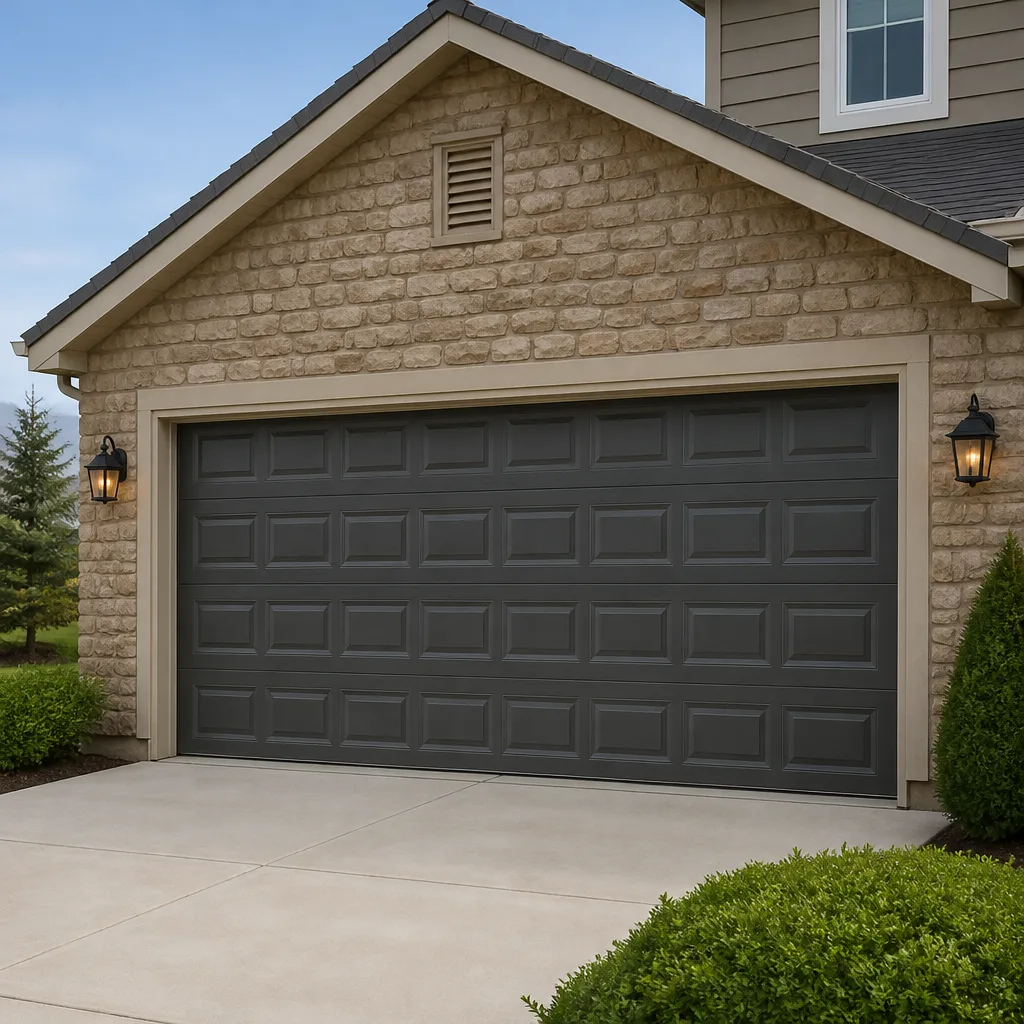 Raised-panel steel
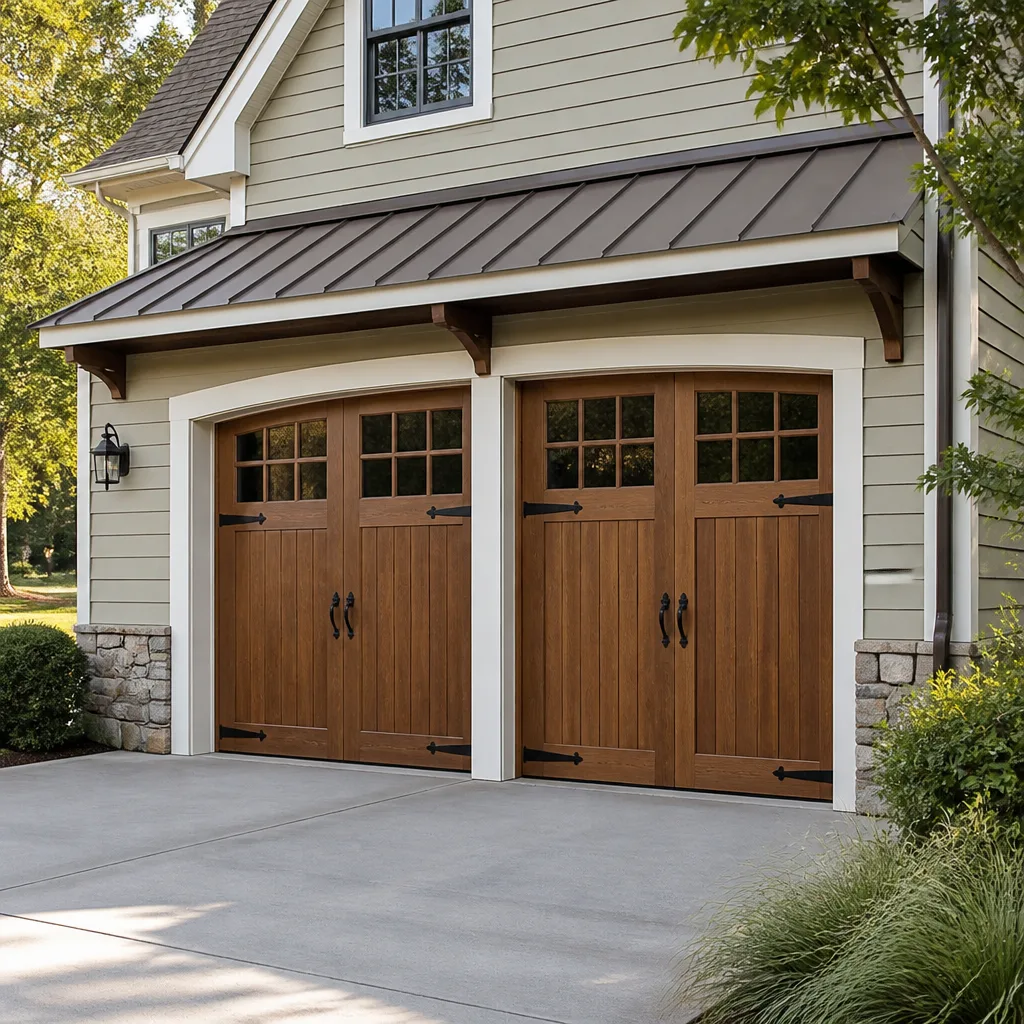 Carriage house
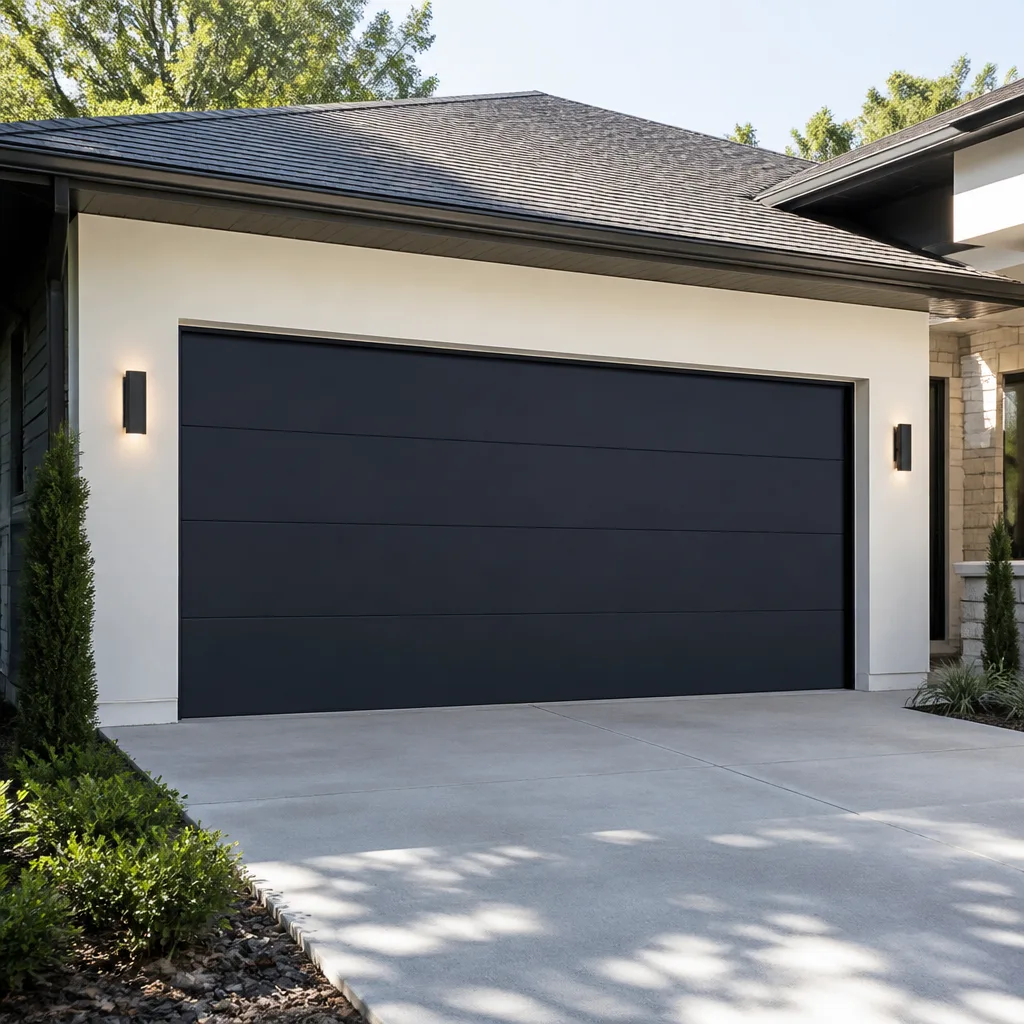 Modern flush
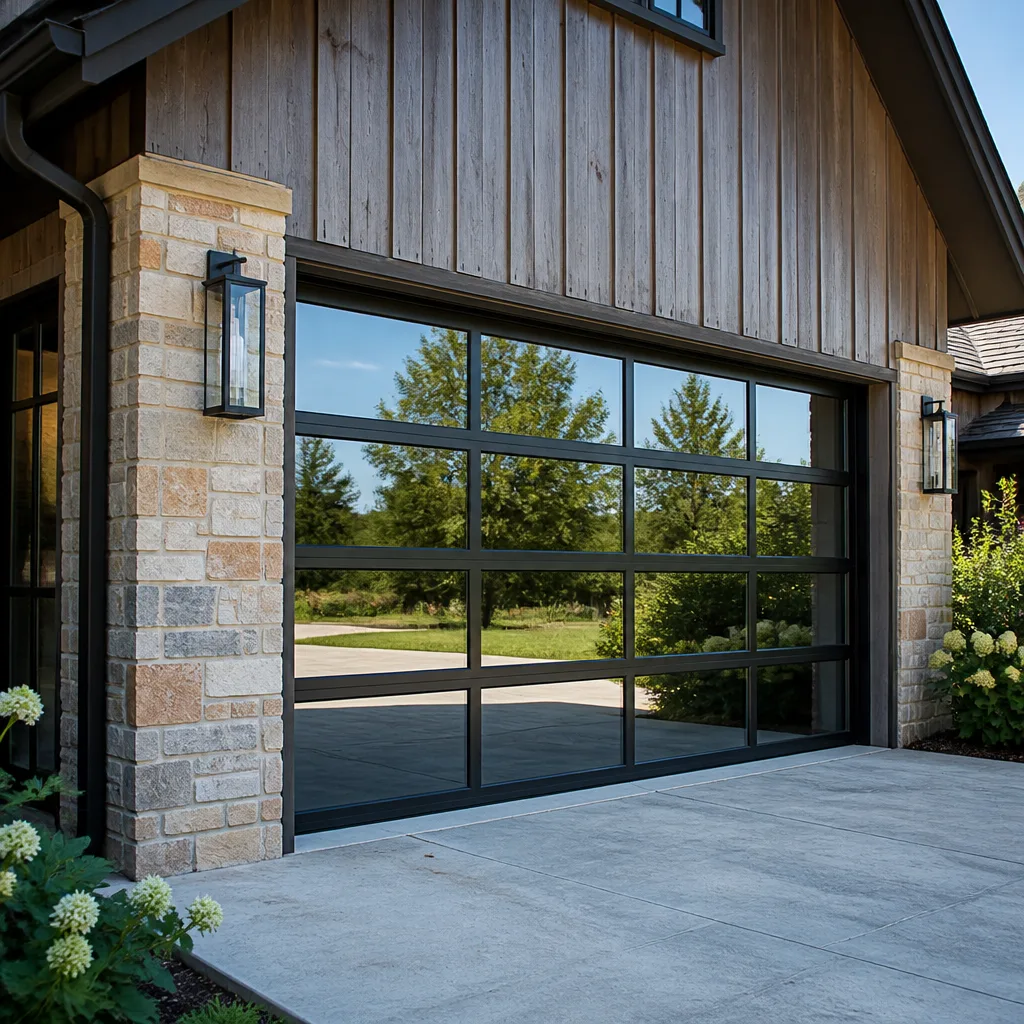 Full-view glass
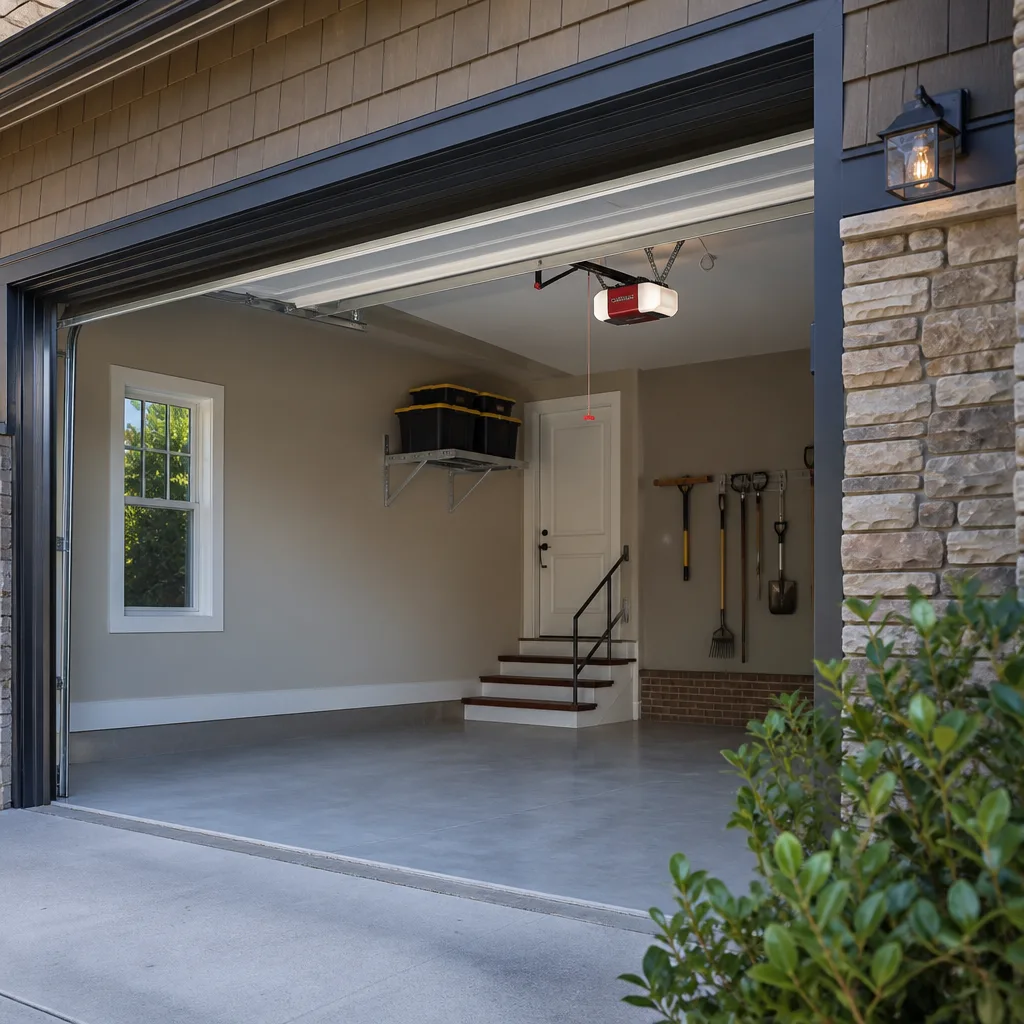 LiftMaster openers
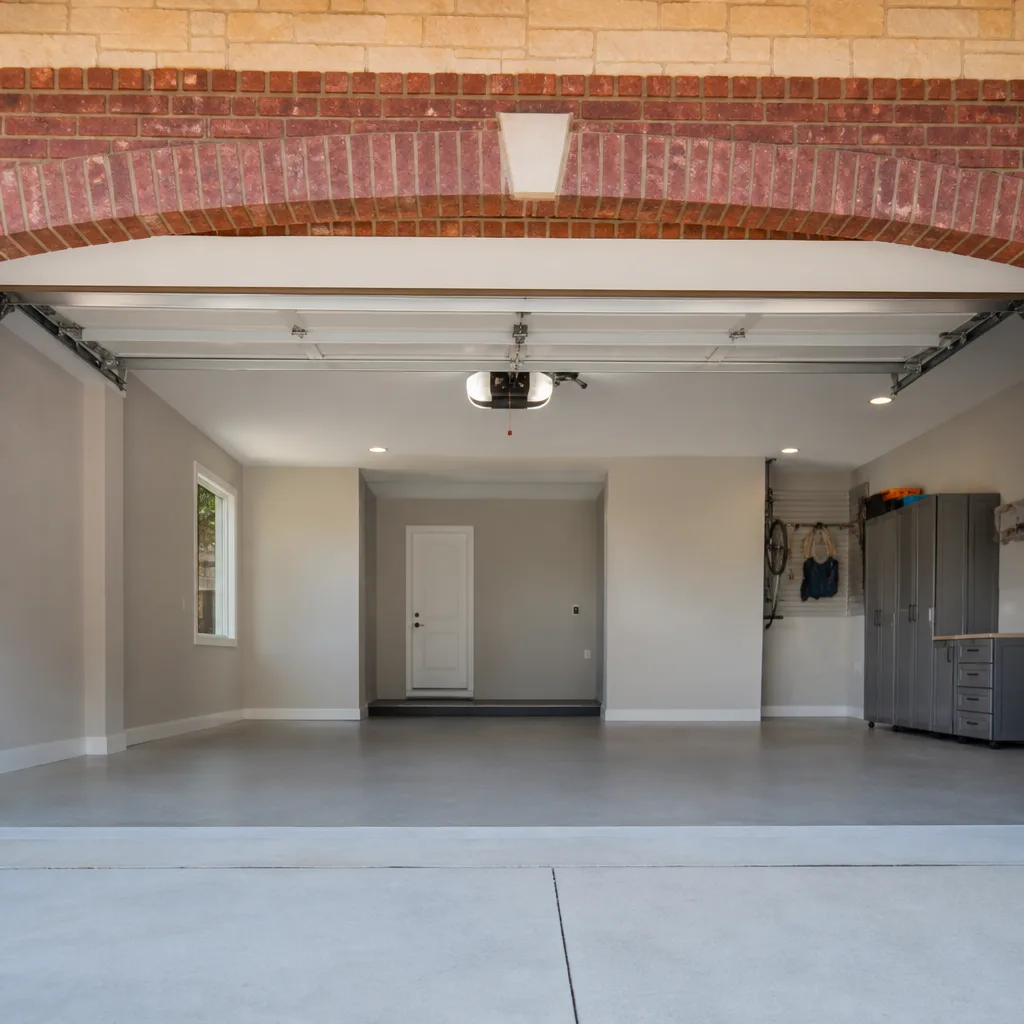 Chamberlain openers
Full 25-point door and opener safety check with every visit - springs, cables, rollers, tracks, and your LiftMaster or Chamberlain opener included
You get a price before we start. It does not change when the truck arrives.
Get your free estimateGarage Door Emergency Preparedness Guide for Torrance Homes
During the last significant South Bay power outage, calls for “broken garage doors” spiked across Torrance. But roughly eight out of ten of those doors weren’t broken at all. Homeowners simply didn’t know how to disengage the opener and lift the door manually without jamming the carriage, turning a temporary outage into a real repair bill. This guide covers exactly what to do when the power drops, the ground shakes, or your door freezes halfway up: the manual release procedure done right, the earthquake sensor every newer Torrance home has, battery backup options for common opener brands, and the safe sequence for a stuck door. Read it now, before you need it.
Quick Answer
Garage door emergencies in Torrance fall into three categories: power outages, earthquake-triggered disconnects, and mechanical failures that leave the door stuck. In most power-related cases, your door works fine, you just need to pull the manual release correctly and lift it by hand. For anything involving a broken spring or cable, stop and call a professional: those components are under enough tension to cause serious injury.
Styles & brands we work with
Table of Contents
- The Manual Release: How to Use It Without Jamming the Carriage
- Power Outage Protocol for Torrance Homes
- Battery Backup: Which Opener Brands Have It Natively
- Earthquake Preparedness: Seismic Sensors and Structural Checks
- Stuck Halfway: The Safe Sequence to Avoid a Dangerous Drop
- What Your Technician Needs to Know Before You Call
- Routine Checks That Prevent Most Emergencies
The Manual Release: How to Use It Without Jamming the Carriage
The red cord hanging from your opener rail is not a ripcord. Pulling it at the wrong angle is the single most common cause of “my garage door broke during a power outage” calls we see in Torrance. Here’s the correct procedure, step by step.
- Confirm the door is fully closed. If the door is open when power drops, you have a different problem that may require securing the door first. If it’s closed, you’re in the safest position to switch to manual.
- Pull the red release cord straight down toward the floor, not toward the garage door. The cord connects to a trolley that rides on the rail. Pulling toward the door pulls the trolley off its track, jamming the carriage. Pulling straight down disengages the trolley cleanly from the opener’s chain or belt.
- You’ll hear and feel a click. That’s the trolley releasing from the drive mechanism. The door is now in manual mode.
- Lift the door by its handle or bottom edge. A balanced door should lift with roughly 10 to 15 pounds of effort and stay open on its own. If it feels heavy, won’t stay up, or starts to fall, the springs are compromised. Stop and keep the door closed.
- To re-engage: pull the cord straight down again, then run the opener once. The trolley will reconnect on its next cycle. Some openers reconnect automatically when you press the wall button or remote.
The mistake we see most often in Torrance homes is homeowners pulling the cord toward themselves or toward the door at an angle while panicking about being late for work. That torque on the trolley is what bends the release mechanism and creates an actual repair out of a simple power blip. Take the extra second to pull straight down.
If the door won’t lift smoothly in manual mode, or you hear grinding when you try to re-engage, that’s a spring or track issue, not an opener issue. Our Garage Door Repair in Torrance team sees this exact scenario weekly: the opener gets blamed, but the springs are the culprit.
Power Outage Protocol for Torrance Homes
Southern California Edison outages in Torrance vary from minutes to hours, and the city’s proximity to the coast means marine-layer moisture adds a quiet complication: humidity makes older torsion springs more brittle over time. A door that works normally when automated may suddenly feel impossibly heavy in manual mode if a spring has been quietly failing. Here’s the sequence to follow when the lights go out.
First: determine whether you need the vehicle in the garage. If you don’t need to leave, do nothing. The door is safer closed and locked. When power returns, the opener will function normally; the outage itself doesn’t damage anything.
Second: if you do need to leave, use the manual release procedure above. Pull the cord straight down, lift the door, and drive out. Then close the door manually from outside using the exterior release lock if you have one, or pull it down by hand from inside and re-enter through a house door.
Third: understand what happens when power returns. If you left the door in manual mode, the opener won’t automatically resume. Press the wall button once. The trolley will travel, re-engage, and pick up the door. If you hear clicking but nothing moves, the trolley didn’t reconnect. Pull the release cord straight down, then try the button again.
One Torrance-specific note: many newer homes in the city have openers with battery backup already installed, because California building codes have started requiring them on new garage door opener installations in certain applications. If your opener has a small battery unit mounted on the motor housing, you may not need the manual release at all. Press the button and the opener runs on battery power, typically for 10 to 20 cycles depending on the unit.
If your opener doesn’t have battery backup and this is the second or third outage you’ve worked through in a year, it may be worth adding one. We cover this next.
Battery Backup: Which Opener Brands Have It Natively
Not all battery backup systems are equal, and the eight major brands we work on at Garage Door Opener Repair in Torrance handle this differently. Knowing what you have determines your options.
- LiftMaster and Chamberlain: Many newer belt-drive models include an integrated battery backup mounted on the opener itself. These are the most common openers we see in Torrance homes with native backup. The battery runs the opener at slightly reduced speed and typically lasts 10 to 20 full cycles per outage.
- Genie: Select models offer battery backup as an included feature on higher-tier units, but many mid-range models require an add-on battery unit purchased separately. Check for a small black battery pack on the opener housing.
- Craftsman: Older Craftsman chain-drive openers, which remain common in Torrance homes built in the 1980s and 1990s, almost never have native battery backup. Some newer Craftsman models offer it, but the older ones require manual operation during outages.
- Raynor, Wayne Dalton, and others: Many openers branded under door brands are actually manufactured by Chamberlain or Genie under license, so backup capabilities map to the underlying manufacturer. We can identify this by model number.
If your opener doesn’t have backup capability, you’re not out of luck. External battery backup units can be retrofitted to many models, and for openers that can’t accept them, the manual release is always available. The key is understanding your specific opener before the next outage. Write down your opener’s brand and model number now, store it near the door’s control panel, or snap a photo of the motor housing label with your phone. You’ll thank yourself when the lights go out.
For Torrance homeowners with a Clopay, Amarr, or Wayne Dalton door paired with a mismatched opener, the door itself doesn’t affect backup capability. The opener does. Focus on the opener model, not the door brand.
Earthquake Preparedness: Seismic Sensors and Structural Checks
Torrance sits near active faults, including the Palos Verdes Fault and the Newport-Inglewood Fault. Californians understand earthquake risk, but few homeowners connect that risk to their garage door. The connection is direct: a seismic sensor on your opener, a standard feature on garage door openers installed in California homes since roughly the mid-1990s, is designed to trip during a quake. That trip disconnects the opener from the door so a misaligned or damaged door doesn’t get forced through a damaged track. When the sensor trips, your opener won’t work, and many people mistake that for broken equipment.
How the seismic sensor works: the sensor, a small mechanical or electronic trigger mounted near or built into the opener, detects ground motion above a certain threshold. When triggered, it releases the opener’s drive mechanism, leaving the door in manual mode. The door may still open by hand if the track is undamaged. If the track is bent, the door won’t move at all, which is safer than the opener forcing it.
How to reset after a quake:
- Inspect the door and track visually before touching anything. Look for visible track separation from the wall, obvious bends, or a garage door leaning out of plumb.
- If the track looks undamaged: re-engage the opener by pulling the red release cord straight down and pressing the wall button once. Many openers with electronic seismic sensors reset automatically when power is cycled or when the opener completes a full cycle.
- If the sensor is a mechanical unit with a reset lever or ball bearing: locate the sensor near the motor housing and return the mechanism to its seated position according to your opener manual. Different brands use different reset methods, and we’ve seen homeowners force the wrong part after a quake, adding a second repair to a first one.
- Run the door through a full cycle. Watch and listen. Any grinding, hesitation, or wobble means the track or rollers took damage. Stop using the opener and call us.
Structural checks before running the opener after a tremor:
- Look at the gap between the door and the horizontal track on each side. The gap should be even top to bottom. Uneven gap means the track shifted.
- Check the spring above the door. A broken spring is visible as a gap in the coil. Don’t attempt to open a door with a broken spring, ever.
- Verify the opener rail is still solidly mounted. A shifted motor can pull the rail out of alignment and cause damage to the door on the next cycle.
- Listen for cable looseness. If the lifting cables on either side of the door have visible slack, the drum has shifted, and the door is unsafe to operate.
- Door brand: Clopay, Amarr, Wayne Dalton, Craftsman, or whichever brand you have. Many doors have the brand printed on the inside of the door panel or on the lock handle. If you don’t know, any photo you can text helps.
- Opener brand and model: LiftMaster, Chamberlain, Genie, and Craftsman are the most common in Torrance. The model number is on a label on the motor housing, often on the side or bottom. A photo of the label is faster than reading a 12-digit number aloud.
- Spring type: torsion springs sit on a steel shaft above the door. Extension springs run along the horizontal tracks on both sides. If you can identify which type you have before calling, the technician knows which parts to bring on the truck.
- What happened immediately before the failure: power outage, earthquake, a loud bang, a door that was making noise for weeks, or a child pulling the release cord. The sequence gives the technician a diagnosis head start.
- Door position right now: fully closed, fully open, or stuck partway. This matters for safety assessment.
- Any visible damage: broken spring, loose cable, bent track, dented panel, or a release cord that feels jammed.
- Balance test: with the door in manual mode, lift it halfway and let go. It should stay in place or move slowly. If it drops, the springs are wearing out and the opener is doing too much work. That’s the condition that leads to early motor failure and eventual broken springs.
- Spring inspection: look at the torsion spring above the door. Rust, gaps in the coil, or any loose winding means replacement is coming. Torrance’s marine air accelerates rust on older springs, especially in homes closer to the coast or in complexes where the garage faces the ocean breeze.
- Roller check: nylon rollers crack and steel rollers rust. Rollers with flat spots cause the jerky movement that wears out hinges and tracks. Replacing rollers is inexpensive compared to the track damage they cause when they fail.
- Sensor alignment: if your safety sensors at the bottom of the door get bumped, the beam misaligns and the door reverses or refuses to close. The symptom looks like an opener failure, but the fix is often just realigning the brackets.
- Lubrication: a garage door needs lubrication on rollers, hinges, and springs twice a year. Use a silicone-based spray, not WD-40 or grease. Lubricating takes five minutes and extends spring and roller life.
For new garage door installations in California, seismic sensors are required compliance. If you’re planning a Garage Door Installation in Torrance, your opener will include this protection. For older openers without a working sensor, retrofitting is possible and worth discussing before the next significant quake.
Stuck Halfway: The Safe Sequence to Avoid a Dangerous Drop
A door stuck halfway up is the most dangerous emergency condition a Torrance homeowner will face, because it usually means a spring has broken or a cable has come off its drum. The door is being held by a single spring and the opener’s drive mechanism, and that condition can fail catastrophically. A falling garage door section weighs 200 to 400 pounds. Here’s the sequence, in order.
First, do not attempt to pull the door down or push it up. The tension holding the door is compromised. Any movement can release it.
Second, pull the manual release cord straight down. This disconnects the opener motor from the door, but it does not necessarily release the door. The door may stay in place due to the remaining spring tension and cable. The goal here is to prevent the opener from trying to move the door, which would be worse.
Third, look at the spring above the door. If the spring has a visible gap in the coil, it’s broken. You now know the problem, and the fix requires professional replacement. If the spring looks intact but a cable is hanging loose or off its pulley, the cable has derailed. Same situation: the door is compromised.
Fourth, decide whether the door needs to be secured open or closed. If the door is stuck open above a vehicle and you need to get the vehicle out, call us before moving anything. If there’s no vehicle in the garage and you don’t need immediate access, leave the door exactly where it is, disconnect the opener by unplugging it, and call for service. Don’t tape it, prop it, or clamp it. A compromised door can drop without warning.
Fifth, if you absolutely must close the door for security reasons and the door will not move under light hand pressure, do not force it. Forcing a door with a broken spring against its own weight can fold the sections and destroy panels. Call us. We will walk through what can be done safely before anyone arrives.
The dangerous drop scenario is worst when the door is open about halfway and a homeowner decides to give it a tug or shove. Cable slack is the telltale sign: if you see the lifting cable on either side hanging loosely, the drum has partially unwound, and the door is being held by friction and one compromised spring. Back away, unplug the opener, and call.
What Your Technician Needs to Know Before You Call
During a high-demand event in Torrance, like a post-earthquake service surge or a citywide outage, technicians triage calls based on urgency. Every minute you save on the phone is time that could go to getting someone out to you. Here’s what to have ready before you dial (877) 705-2052 or any garage door service company.
Having this information ready means a technician can arrive with the right parts on the first visit, which matters more in Torrance during a high-demand event than in day-to-day service. When every call is an emergency, the person who knows their door brand and opener model gets prioritized.
We work on all eight major brands – LiftMaster, Chamberlain, Genie, Clopay, Amarr, Wayne Dalton, Craftsman, and Raynor – which means we can serve nearly any home in Torrance regardless of who originally installed the equipment. We’re the Anvil Garage Door Repair home base for exactly this reason: broad brand compatibility without replacement pressure. Your door, fixed right.
Routine Checks That Prevent Most Emergencies
Anvil exists because most garage door emergencies were preventable six months earlier. Here are the checks we perform on our own homes in Torrance, twice a year, aligned with the daylight saving clock changes.
These checks take 15 minutes twice a year. They prevent most of the “emergency” calls we answer. If any check fails, and you want a professional evaluation, our Garage Door Repair in Torrance service includes a full system inspection with every visit. We don’t charge for the estimate, and we’ll tell you if the door still has years left in it: we don’t push replacements for problems that can be repaired. Built to the Anvil standard means fixing what’s broken, not upselling what isn’t.
Common Mistakes to Avoid
- Pulling the release cord toward the door or at an angle. This bends the trolley release mechanism and creates a jam that requires a service call. Pull straight down, every time.
- Forcing a door with a broken spring. The door feels heavier, so the natural response is to pull harder. That’s how panels fold, cables snap, and fingers get caught. If the door won’t move with light effort, stop.
- Re-engaging the opener after an earthquake without a visual inspection. Bent tracks don’t fix themselves. Running the opener through a damaged track bends the door sections and can pull the opener rail out of alignment.
- Ignoring a noisy door for months. Grinding, popping, or a door that shudders at the halfway point are warnings. Garage doors don’t fail quietly at random; they fail gradually and then suddenly. If it’s making noise, it’s already telling you something.
- Assuming the opener is the problem. Most garage door failures are mechanical: springs, cables, rollers, and track alignment. The opener gets blamed because it’s the visible part. A qualified technician checks the whole system before deciding where the failure is.
- Taping, propping, or clamping a stuck door. Duct tape does not hold a 300-pound door. If the door is stuck open and can’t be closed safely, unplug the opener and secure the interior door between the garage and house instead. Call a professional for the door itself.
- Calling for emergency service without knowing your door brand or opener model. During a Torrance outage or post-quake surge, this wastes the phone time needed to dispatch help. Have the info ready before you call.
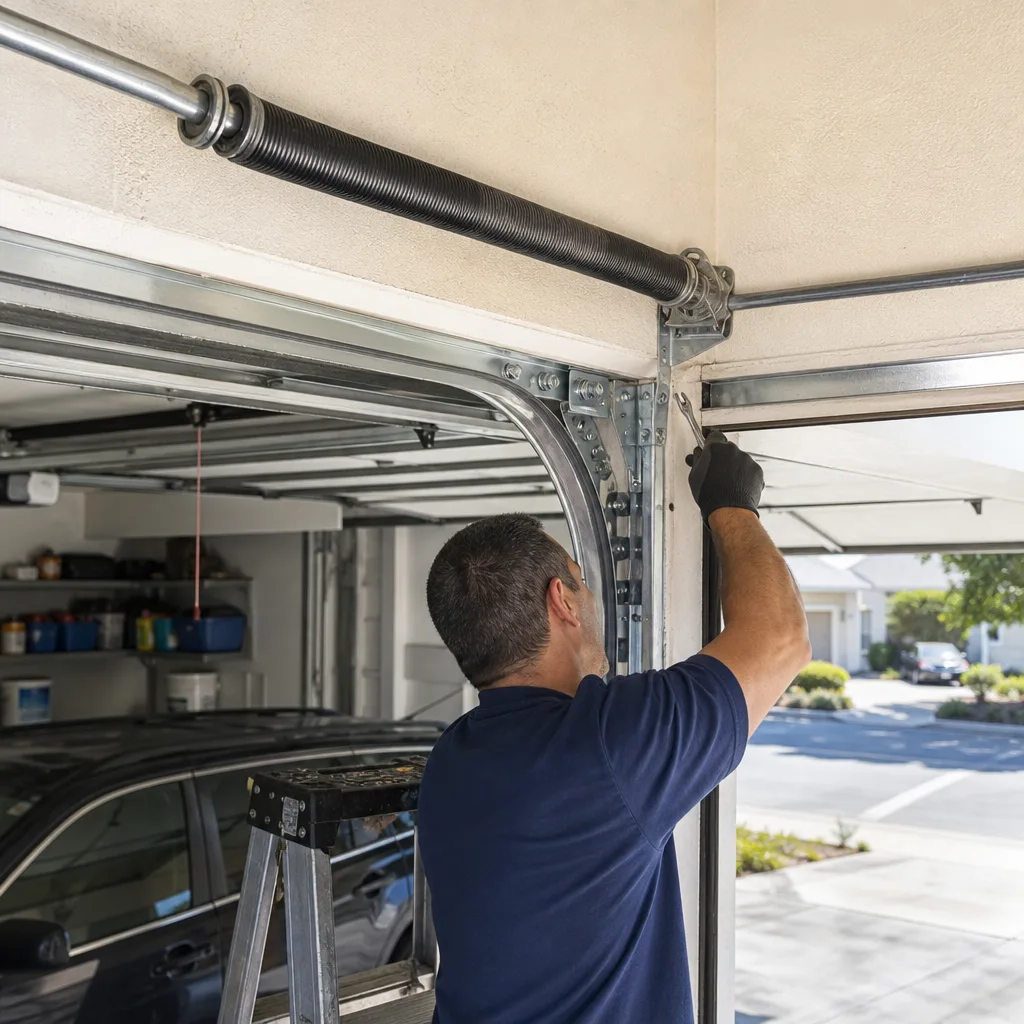
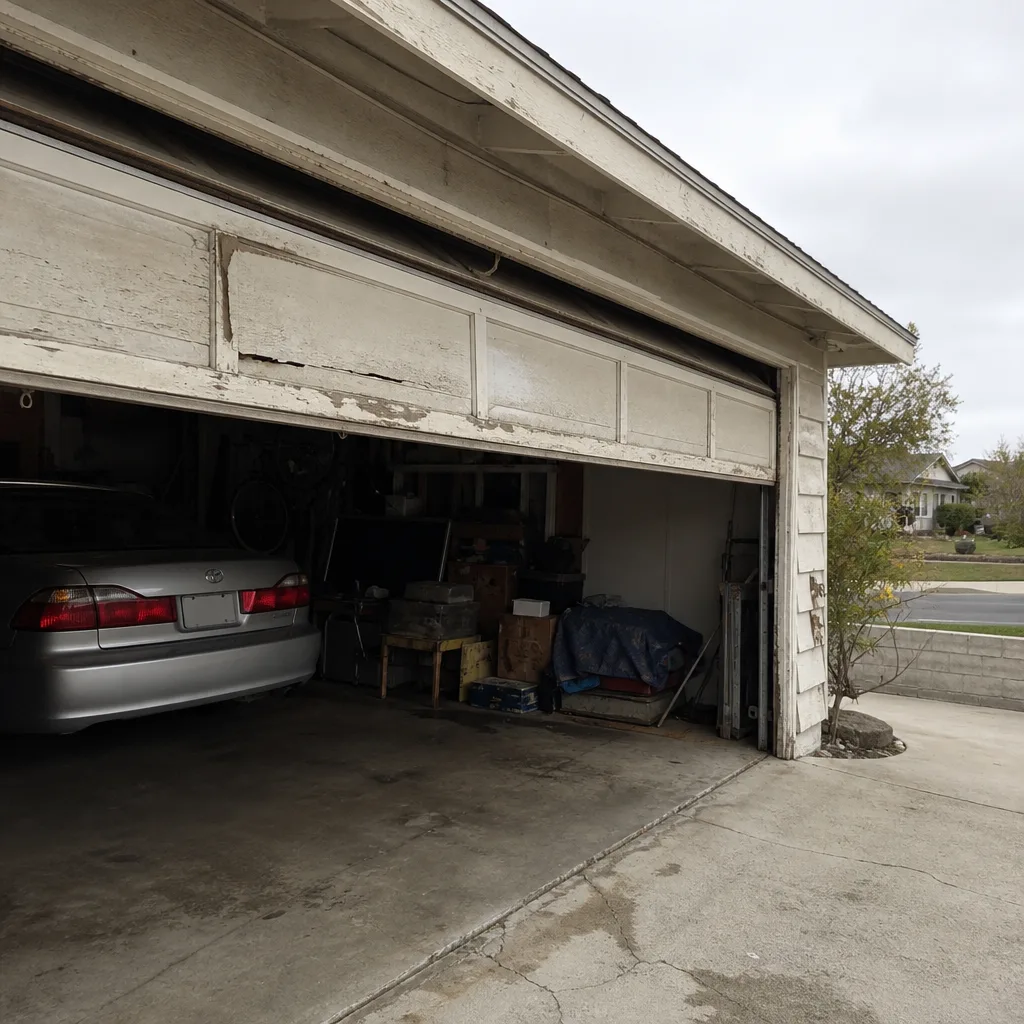
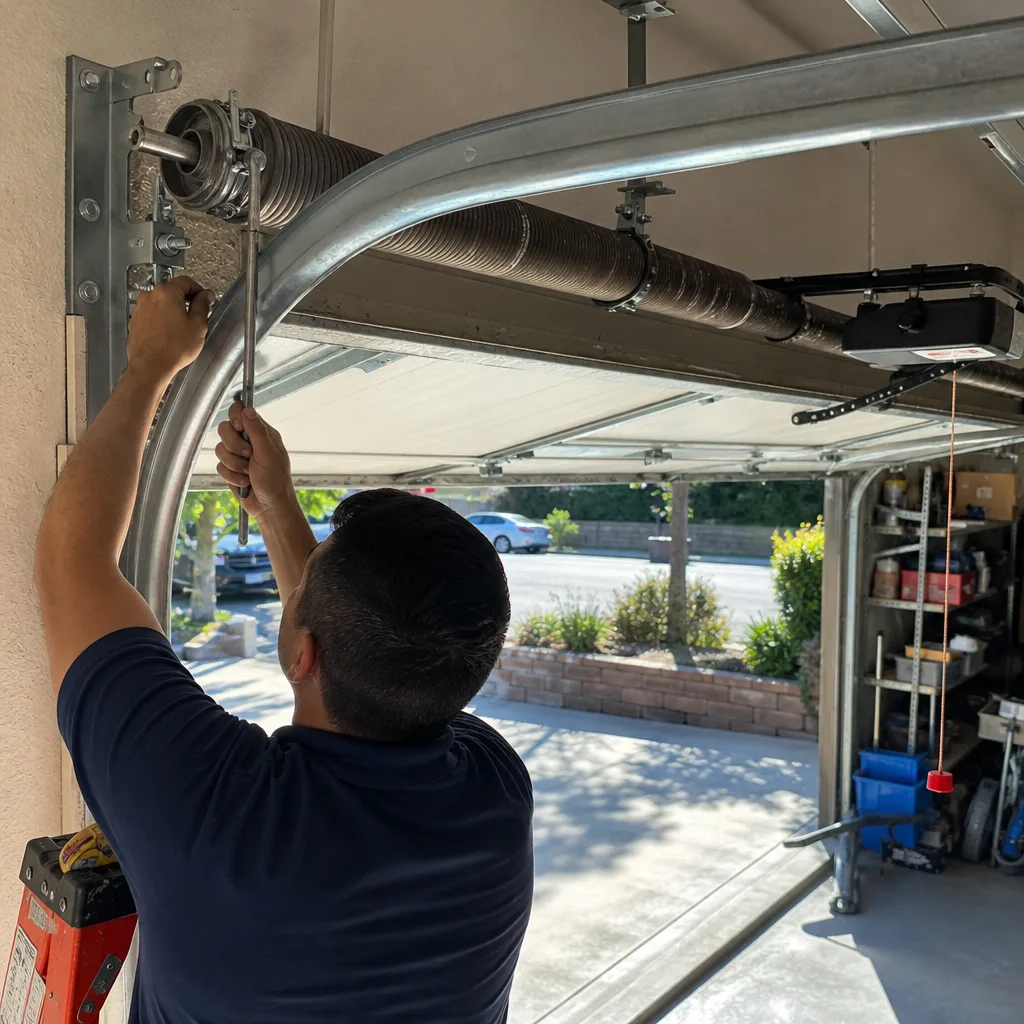
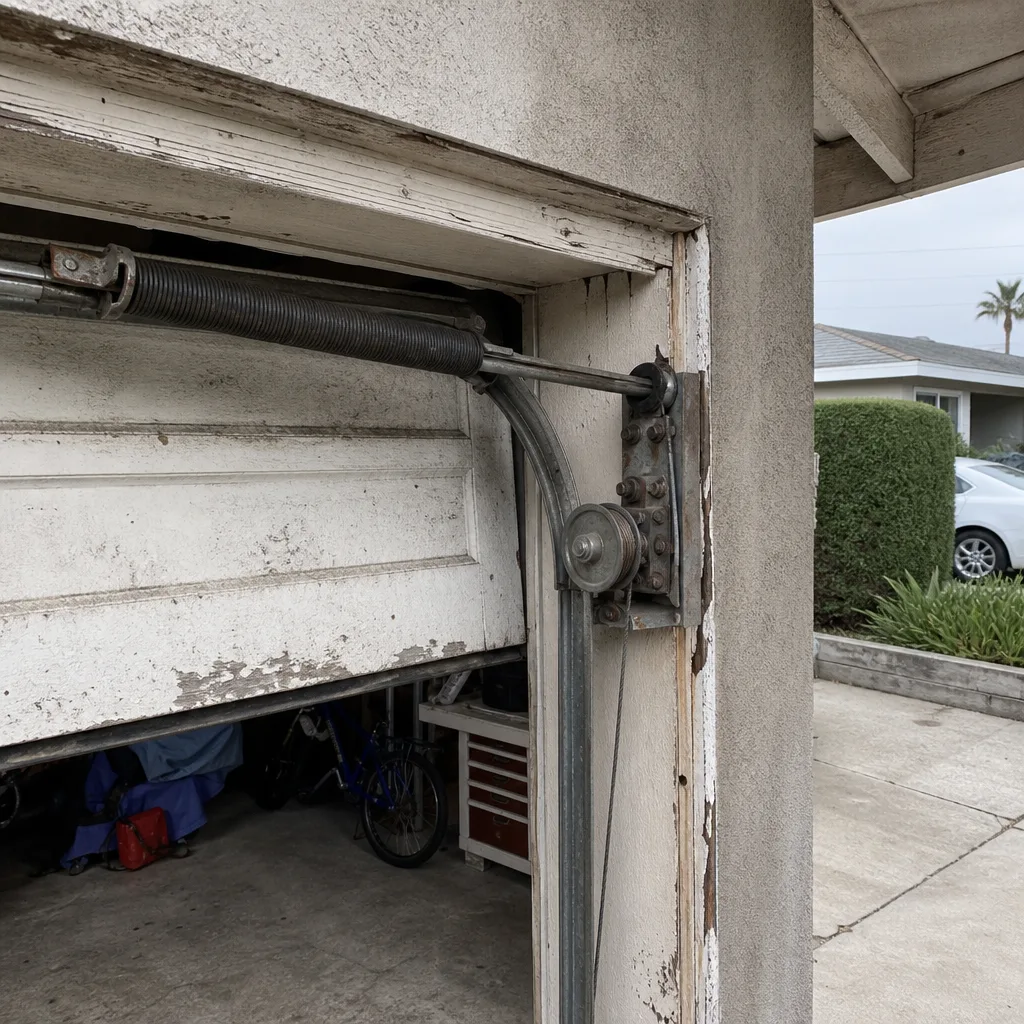
See the difference
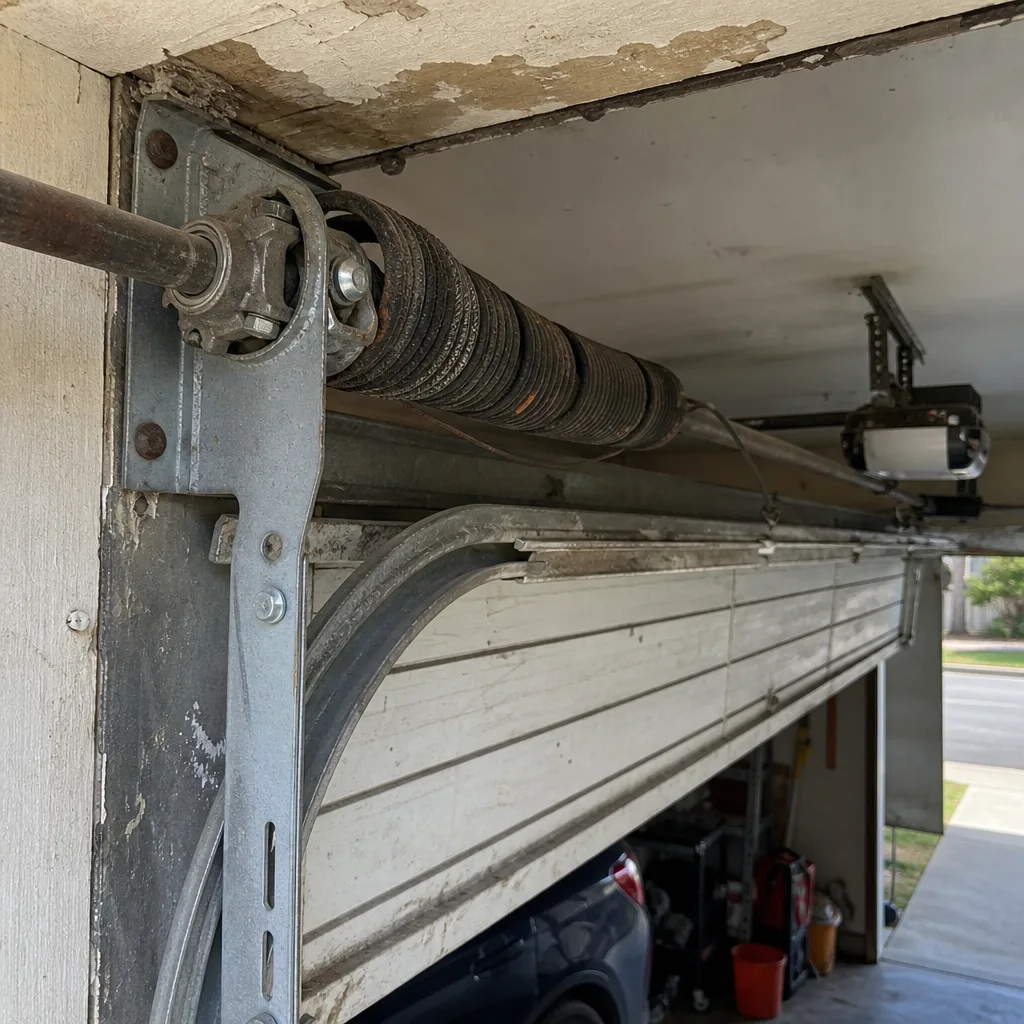 Before
 After
 Before
 After
 Before
 After
When to Call a Professional
Call a garage door professional if you see a broken spring with a visible gap, a cable that’s off its drum or hanging loose, a bent track, or a door that won’t stay open in manual mode. Call if the opener runs but the door doesn’t move, which suggests a stripped gear or broken drive mechanism. Call if the door is stuck open and you can’t close it safely. Don’t touch spring-related failures yourself: torsion springs store enough energy to launch a tool or cause serious injury, and we tell every customer the same thing: the spring is not where you learn DIY. Opener or door, same call, same team. Garage Door Opener Repair in Torrance and Garage Door Installation in Torrance are handled by the same technicians, so no separate appointment for different problems. Anvil Garage Door Repair offers free estimates in Torrance: call (877) 705-2052, and the price is quoted and agreed before any work begins.
Frequently Asked Questions
If your opener has no battery backup, pull the red manual release cord straight down toward the floor, then lift the door by hand. The mistake to avoid is pulling the cord with any side angle, which jams the trolley carriage and creates an actual repair. If the door feels unusually heavy or won’t stay open, the springs are compromised and you should call a professional before the door drops.
A seismic sensor detects ground motion above a threshold and disconnects the opener from the door when triggered, preventing the opener from forcing a misaligned door through a damaged track. After a quake, inspect the track for damage, then reset the sensor by re-engaging the release mechanism and running a full cycle. Some sensors reset automatically, others have a manual reset.
It depends on the opener. Many LiftMaster and Chamberlain models include native battery backup or accept a retrofit unit. Genie offers it on select models, often as an add-on. Older Craftsman chain-drive openers from the 1980s and 1990s rarely support backup and require manual operation during outages. Call (877) 705-2052 with your opener model number and we’ll tell you what’s possible.
Emergency garage door repair in Torrance typically starts around $180 to $340 for spring replacement and varies based on parts, door size, and opener condition. We quote the full price before any work starts, and the estimate is free. There’s no hidden upcharge for revealing the problem during an emergency call.
It is safe only if the track is undamaged and the springs are intact. After a quake, check the track for separation, the spring for gaps, and the cables for slack. If everything looks normal, use the manual release to operate the door. If anything looks bent, shifted, or loose, leave the door alone and call a professional before the opener is used again.
We work on all eight major brands: LiftMaster, Chamberlain, Genie, Clopay, Amarr, Wayne Dalton, Craftsman, and Raynor. We diagnose by the equipment you already own, not by what we’d like to sell you. Opener or door, same call, same team. Call (877) 705-2052 for a free estimate.
The Bottom Line
Torrance homeowners face garage door emergencies that are mostly preventable with knowledge: how to use the manual release correctly, how to reset after an earthquake, how to check springs before touching anything, and what information to have ready when calling for help. Pull the red cord straight down. Don’t force a stuck door. Check the track after a tremor. Know your opener’s model number. And remember that Anvil Garage Door Repair is the multi-brand specialist that fixes the door, the opener, or installs a new system, on whichever brand you already own, without pushing unnecessary replacements. When the power drops or the ground shakes, you know exactly what to do. If you don’t, we answer the phone.
Written by the team at Anvil Garage Door Repair, serving Torrance since 2017.