
Last updated October 31, 2026
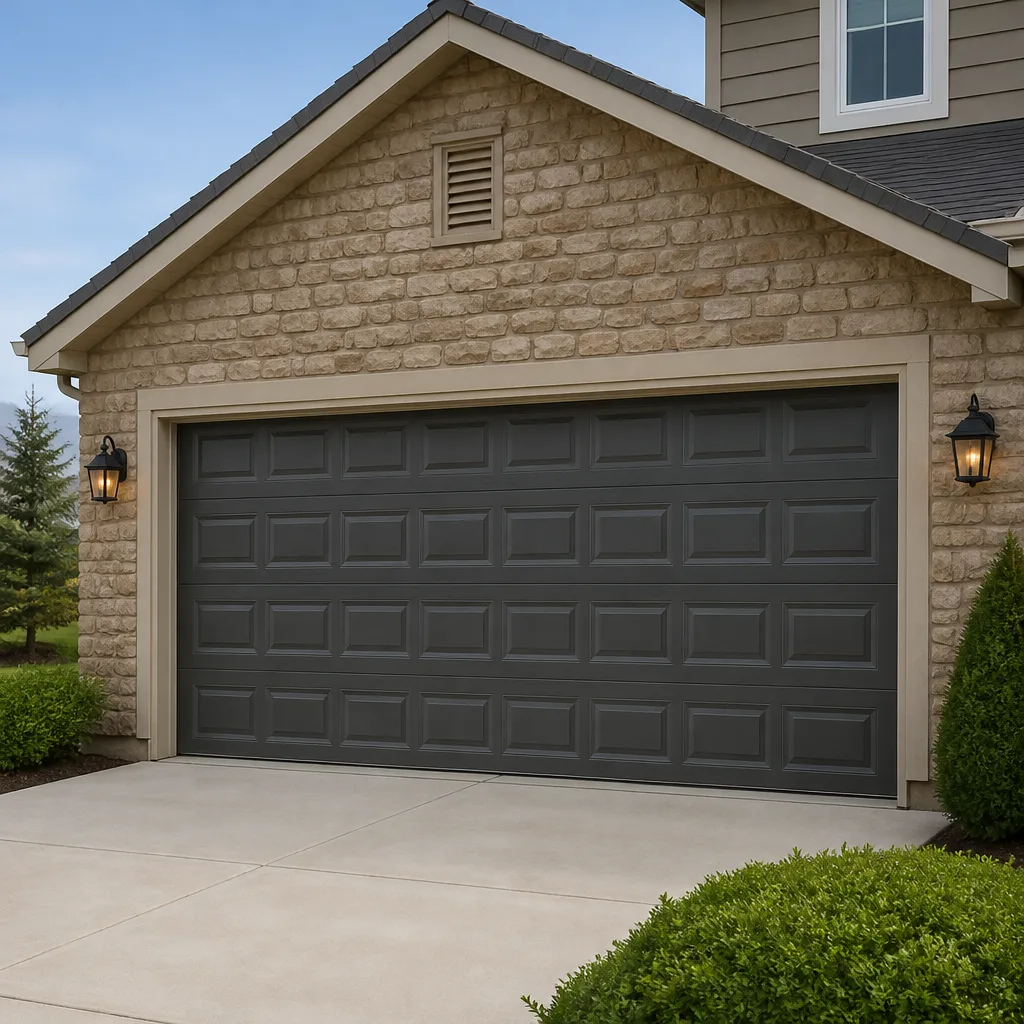 Raised-panel steel
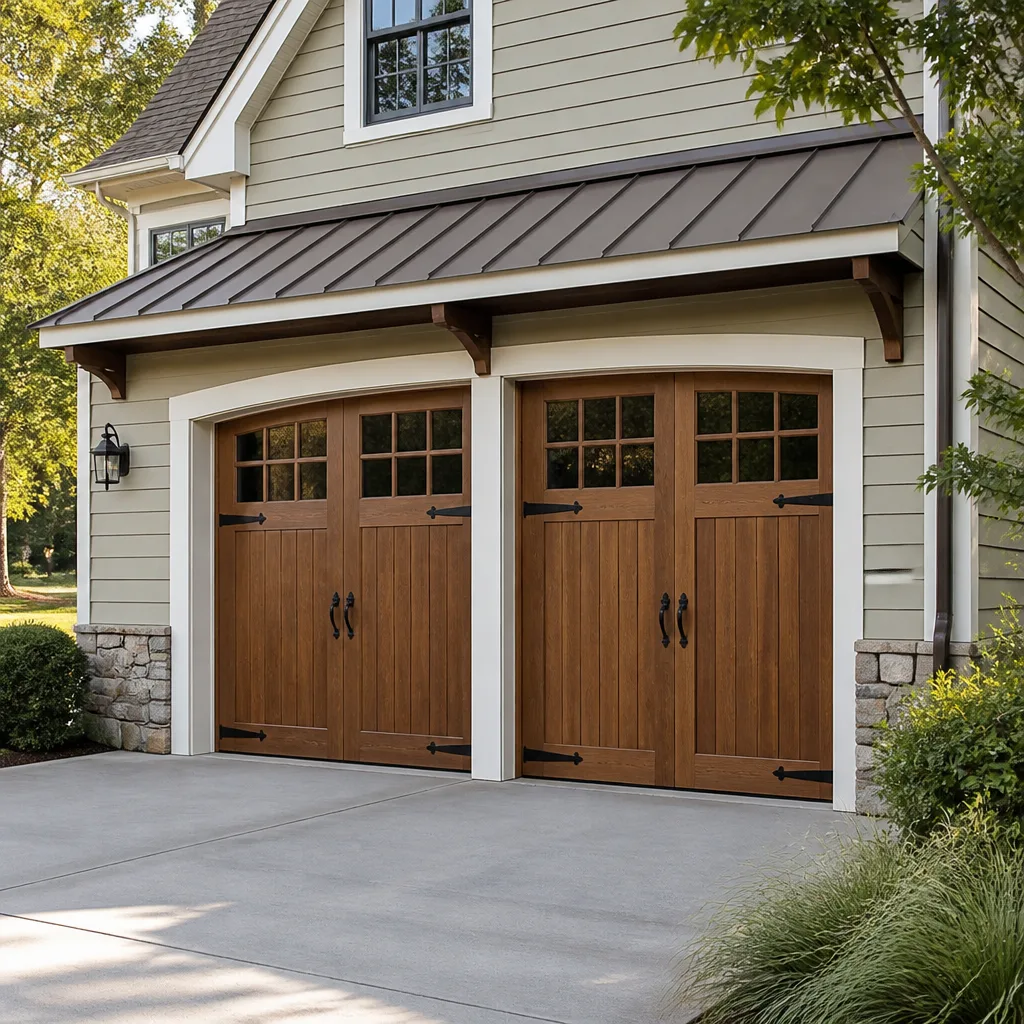 Carriage house
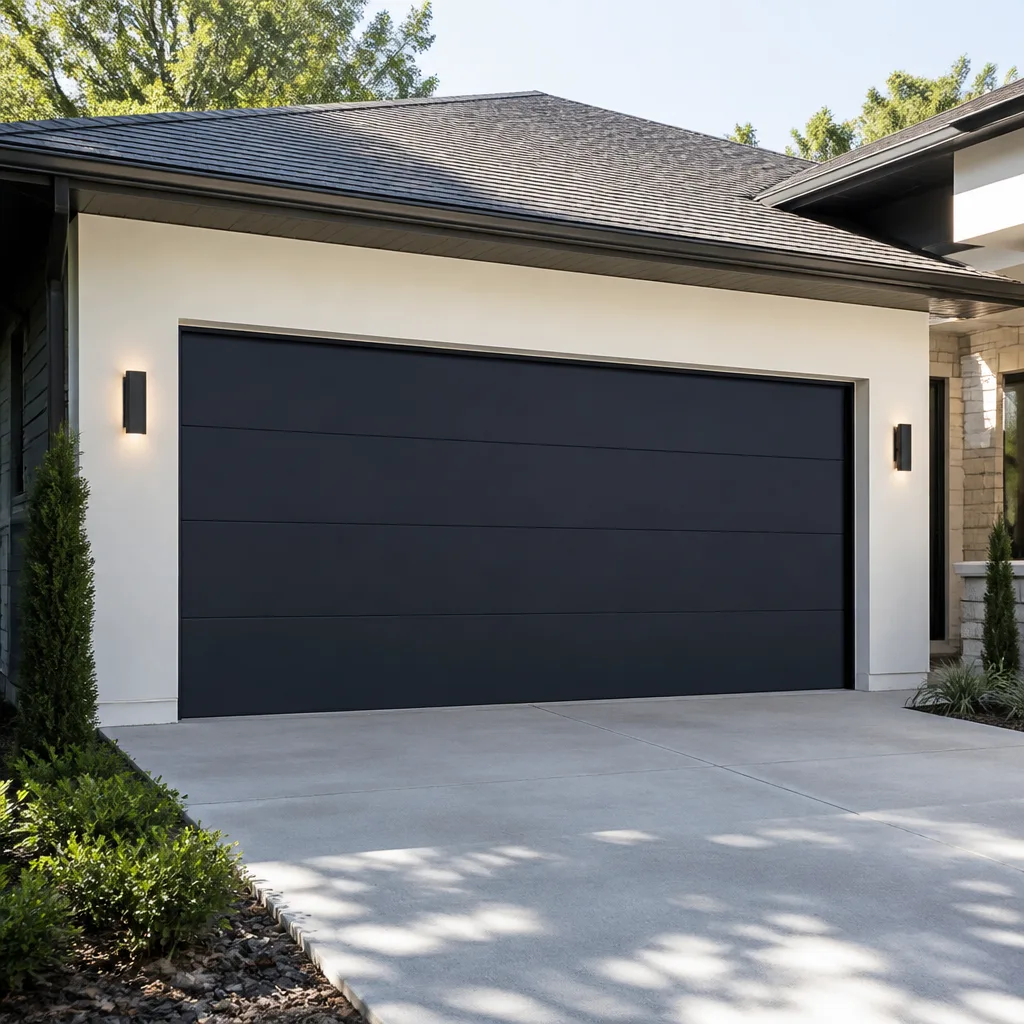 Modern flush
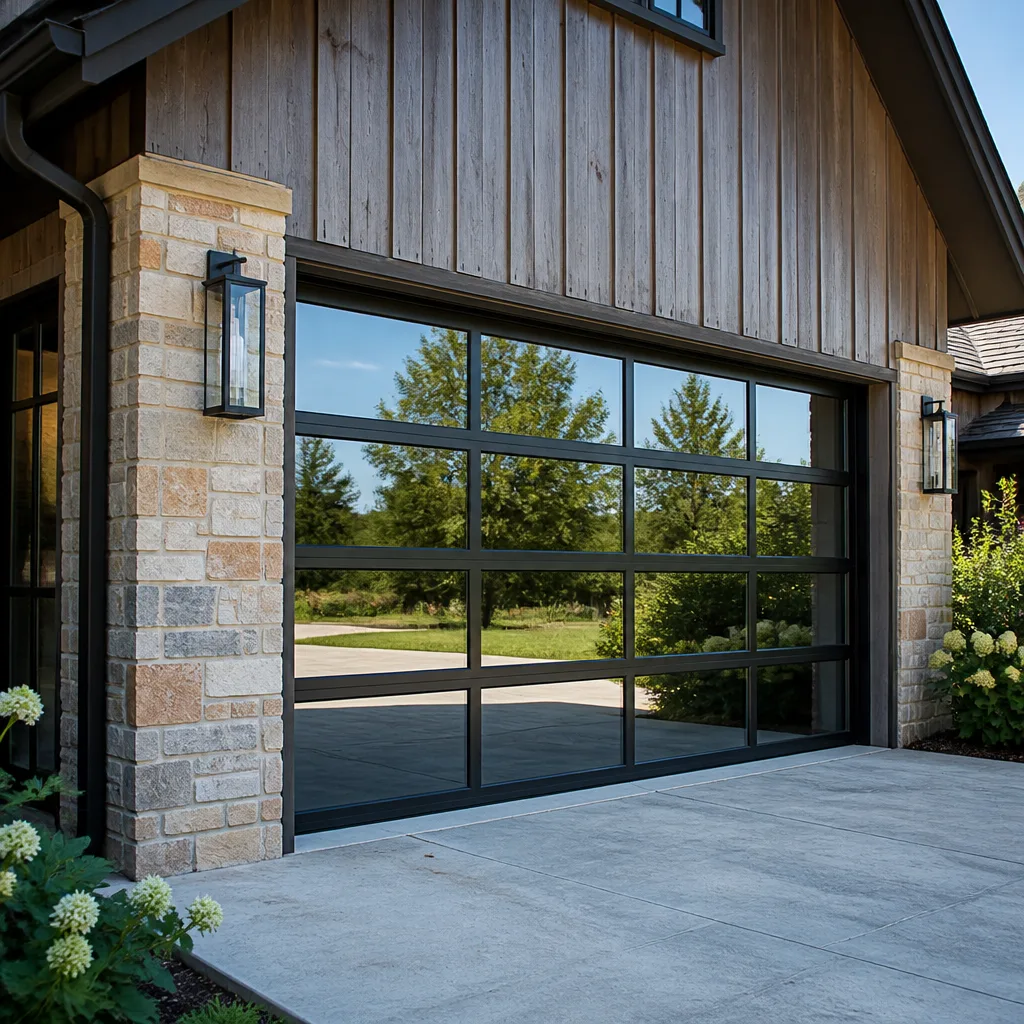 Full-view glass
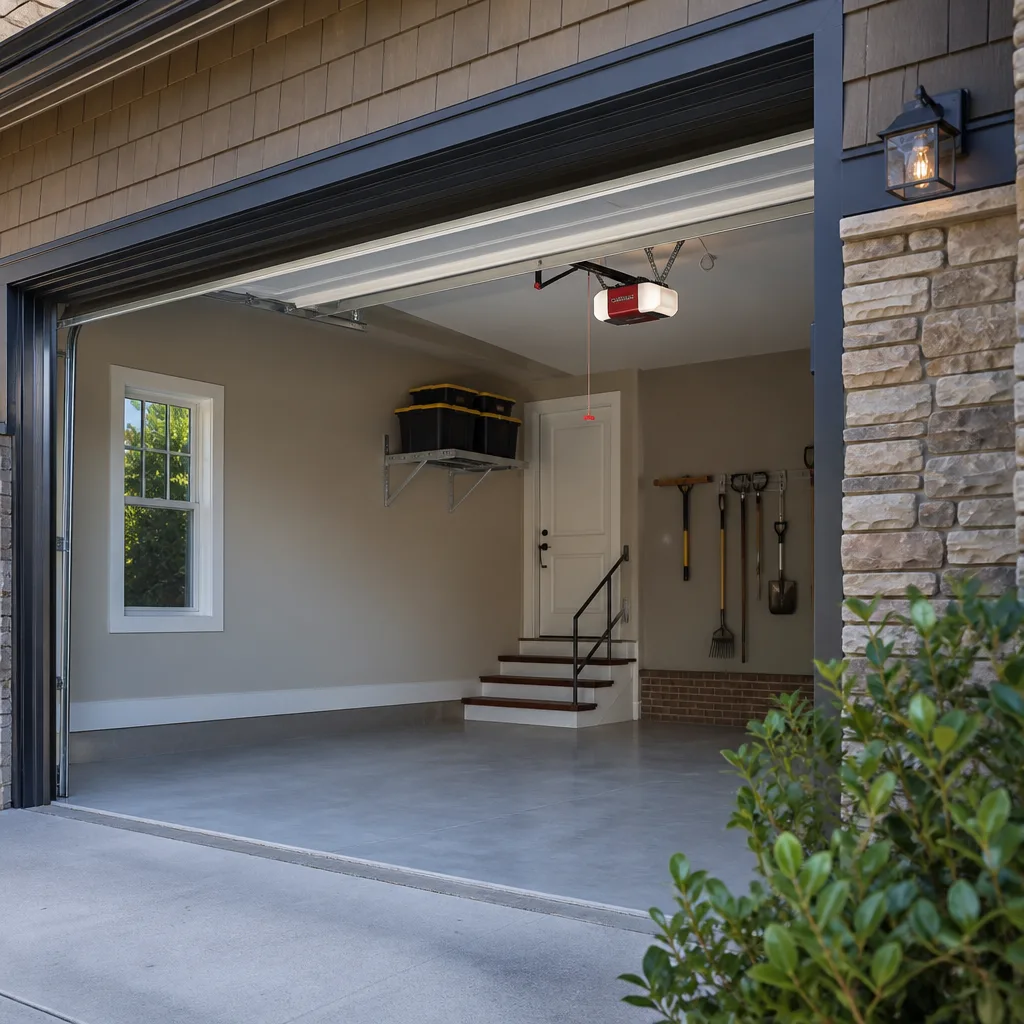 LiftMaster openers
 Chamberlain openers
Full 25-point door and opener safety check with every visit - springs, cables, rollers, tracks, and your LiftMaster or Chamberlain opener included
You get a price before we start. It does not change when the truck arrives.
Get your free estimateGarage Door Repair Maintenance Checklist for Torrance Homeowners
Most garage door maintenance advice gets the basics wrong from the first step. The most common mistake we see in Torrance isn’t skipping maintenance altogether. It’s spraying the wrong lubricant on the wrong part and calling it done. WD-40 on a torsion spring does not lubricate it. It strips whatever protective coating remains and accelerates metal fatigue. This Garage Door Repair Troubleshooting: Common Problems and How to Fix Them is built from what actually fails first on garage doors in the South Bay, not from a generic national template. You’ll learn what to lubricate, what to leave alone, how to test your door’s balance in under a minute, and which tasks genuinely require a technician.
Quick Answer
A proper garage door maintenance routine in Torrance means lubricating the rollers, hinges, and springs with a lithium-based grease or silicone spray every 6 months, testing door balance monthly, inspecting cables for rust or fraying every 6 months due to the coastal air, and checking weatherstripping quarterly. Skip lubricating the track. Skip WD-40 entirely. If the door fails a balance test or you see cable wear, call our Garage Door Repair team before operating the door again.
Styles & brands we work with
Table of Contents
- The Failure Order: What Breaks First in Torrance
- What to Lubricate, What to Skip, and What Product to Use
- The 60-Second Balance Test That Catches Springs Before They Snap
- Coastal Cable Inspections: Why Every 6 Months Matters in Torrance
- Weatherstripping: Real Wear vs. Cosmetic Aging
- The Monthly and Seasonal Maintenance Schedule
- Tasks That Require a Technician’s Torque Wrench
The Failure Order: What Breaks First in Torrance
Every region has a failure pattern. In Torrance, the marine layer changes the order. Inland homes may lose openers first. Here, we see spring and cable failures dominate because the salt-laden air works on metal constantly, even when the door sits still. The sequence most South Bay technicians recognize goes like this:
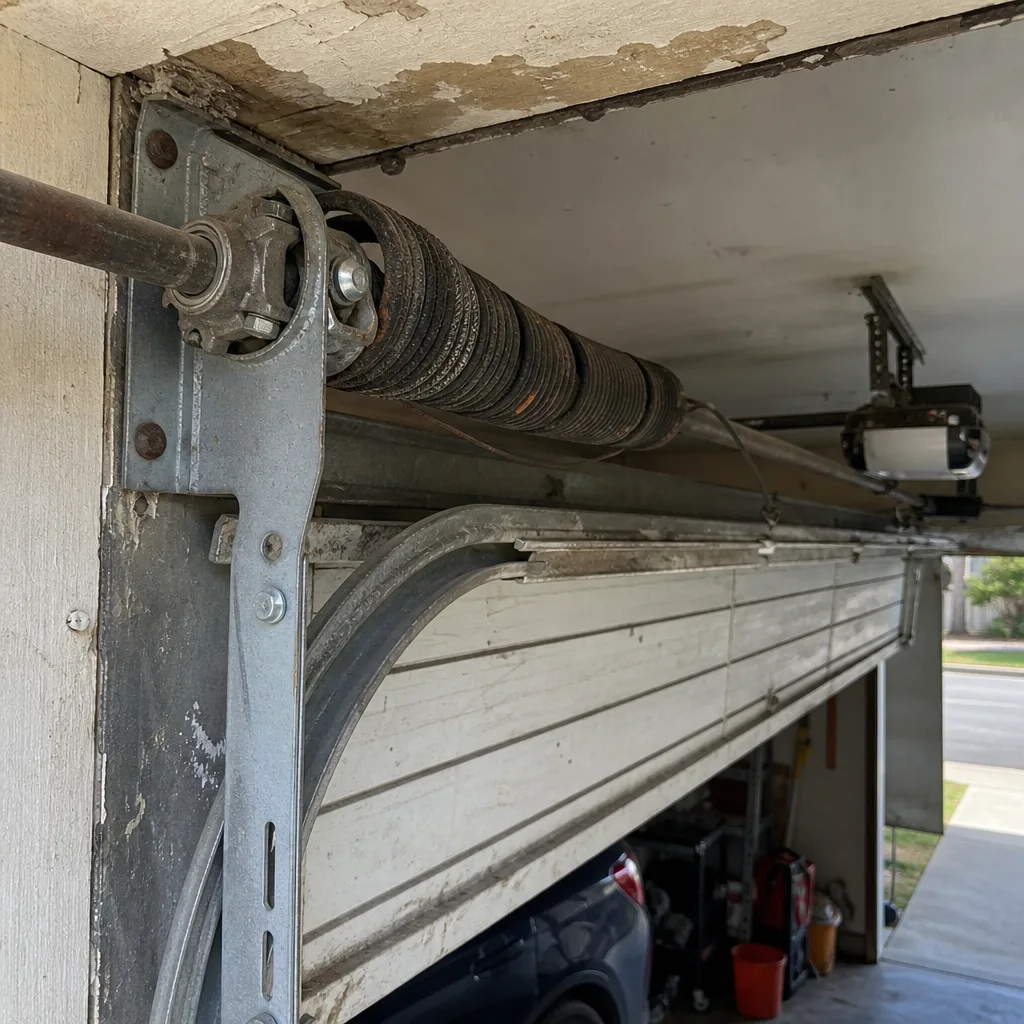
- Torsion springs – The springs carry the entire weight of the door. Torrance’s coastal moisture creates surface rust that becomes a stress point. A spring rated for 10,000 cycles in a dry climate can fail noticeably sooner here without maintenance.
- Lift cables – These stranded steel cables live inches from the spring and suffer the same constant salt exposure. Frayed cables snap without warning and the door drops hard to one side.
- Rollers – Nylon rollers wear out from friction. Steel rollers rust from the marine layer. Either way, worn rollers put lateral stress on every other component.
- Bottom weatherstripping – Torrance gets real rain in winter months. Compressed or cracked rubber seals let water in and invite rust on the bottom panel.
- Opener gears and circuit boards – Modern openers from Anvil Garage Door Repair’s opener service brands like LiftMaster and Chamberlain have plastic gears that strip gradually. Humidity here can shorten circuit board life compared to drier climates.
Maintenance that follows this order catches problems in sequence. If your cables are fine but your rollers are singing, fix the rollers before they eat the tracks. If your spring fails a balance test, address it before it snaps and damages panels. Understanding the failure order in Torrance means maintaining what actually breaks, not what a national checklist says to clean.
What to Lubricate, What to Skip, and What Product to Use
Lubrication is the single highest-value maintenance task you can do yourself. It’s also the one most people get wrong. The right product on the right part extends component life. The wrong product on the wrong part can destroy a spring in a season. Here’s the breakdown.
Parts you should lubricate
- Rollers – Use a silicone spray or lithium grease on the roller bearings. Aim for the bearing, not the wheel surface. Rollers that spin freely reduce drag on the entire system.
- Hinges – Every hinge pin needs a few drops of oil or a shot of silicone. Hinges that bind force the panel to flex, which leads to stress cracks over time.
- Torsion springs – Use a lithium-based garage door grease, not a spray. Spray products run off. The goal is a thin coat that stays on the spring coils and prevents surface rust in Torrance’s damp air.
- Bearing plates – The end bearing plates at each side of the torsion tube need grease. These plates take the full load of the spring assembly and run dry if ignored.
Parts you should never lubricate
- The track – Never grease, oil, or lubricate the vertical or horizontal track. The rollers are not supposed to slide on the track. Grease collects dust and creates a grinding paste that destroys rollers. Clean tracks with a dry cloth only.
- Nylon rollers – The wheel itself does not need lubricant. Only the bearing does. Spraying silicone on a nylon wheel introduces dust collection for zero benefit.
- Springs with WD-40 – WD-40 is a water displacer, not a lubricant. It briefly loosens surface rust, then evaporates and leaves the spring drier than before. In Torrance’s moist air, that accelerates the rust cycle. Avoid it on every garage door component.
For coastal homes specifically, we recommend a heavier lithium grease on springs than you’d use inland. The marine layer eats light spray coatings. A grease that stays put is worth the extra minute to apply. Most hardware stores in Torrance carry what you need, and the price difference between a generic spray and a proper garage door grease is about five dollars. Spend the five dollars.
The 60-Second Balance Test That Catches Springs Before They Snap
A torsion spring under tension is dangerous. Homeowners should not touch it, adjust it, or attempt to repair it. The balance test does not require touching the spring. It requires watching the door. Here is the step-by-step process.
- Close the garage door completely.
- Pull the red emergency release handle to disengage the opener. The door is now manually operated. Be ready: if the spring is broken, the door will be heavy and may drop.
- Lift the door by the handle until it is halfway up, at about waist height.
- Let go. Watch what happens.
- A properly balanced door stays in place or drifts slightly. It does not rise or fall on its own.
- If the door drops quickly, the springs are under-tensioned or failing. If it rises on its own, they are over-tensioned.
- Re-engage the opener by pulling the release cord toward the door until it clicks back into place.
Run this test monthly. It takes less than a minute and it tells you more about the health of your springs than any visual inspection. A door that has started drifting downward over a period of weeks is a door whose springs are losing strength. That is the moment to call a technician. Repairs at this stage are simple spring replacements. Waiting until the spring snaps means a door that slams shut, potentially damaging panels or posing a real injury risk. For Torrance homeowners, this test is the single best early-warning system you have for the most common failure point.
Coastal Cable Inspections: Why Every 6 Months Matters in Torrance
Inland garage door maintenance guides typically recommend checking cables once a year. That interval is wrong for Torrance. The persistent marine layer deposits salt on exposed metal surfaces, including the aircraft-grade steel cables that pair with your torsion springs. Salt accelerates corrosion. Corrosion weakens individual cable strands. Strands break under load. The cable frays, then fails entirely, and the door drops violently to one side.
Inspection is simple and visual, and it takes about two minutes.
- With the door closed, stand inside the garage and look at the cables running along both sides of the door.
- Look for rust discoloration, especially near the bottom bracket where moisture collects.
- Look for broken strands. These appear as tiny wires poking out from the main cable bundle, like a frayed shoelace.
- Look for kinks or flat spots where the cable has been pinched.
- If you see any of these signs, do not operate the door. Call a technician.
Cable repair is not a DIY job. The cables are under the same tension as the springs. The Garage Door Repair in Torrance service we operate at Anvil handles cable replacement on all major door brands, including Wayne Dalton and Raynor models that use proprietary cable diameters. The important takeaway: in Torrance, check cables every six months. Set a calendar reminder for the spring and fall equinox. It’s the simplest schedule that accounts for the coastal environment.
Weatherstripping: Real Wear vs. Cosmetic Aging
Bottom weatherstripping on a garage door serves one job: sealing the gap between the door and the concrete floor. It keeps rain out, leaves out, and reduces the humidity that reaches the inside of your door panels. Over time, the rubber or vinyl strip compresses, cracks, and eventually tears. Some of that is cosmetic. Some of it is functional failure. Telling the difference is what saves you from unnecessary replacement.
Cosmetic aging: leave it alone
- Surface discoloration. Graying or yellowing is UV exposure, not failure.
- Light scuffing on the bottom edge from normal contact with the floor.
- Minor compression that still springs back when pressed.
Functional failure: replace it now
- Cracks that go through the material, not just across the surface.
- Visible gaps between the seal and the floor when the door is closed. On a sunny day, you’ll see light coming through.
- The seal stays flat when pressed and does not return to shape.
- Water stains on the inside bottom panel after rain. That means the seal has already failed.
In Torrance, winter rain is the real test. If water pools inside the garage after a storm, your weatherstripping has crossed from cosmetic to failed. Replacement strips are inexpensive, but the installation matters. The strip must be the right height for the door, and the channel it slides into must be clean. A poorly fitted strip creates the same leak with a new part. Craftsman and Clopay doors use slightly different channel profiles, and a strip that is loose in the channel will pull out on the first cycle. If you are not sure which profile your door takes, this is an easy job for a technician to handle during a tune-up visit.
The Monthly and Seasonal Maintenance Schedule
Most maintenance checklists fail because they are too long. Homeowners look at a 20-item list and do none of it. The key is separating what needs attention monthly from what needs attention seasonally. Here is a schedule built for Torrance’s climate that actually gets done.
Monthly: 5 minutes
- Run the balance test described above.
- Watch and listen to the door open and close one full cycle. Look for jerky movement, grinding, or squealing.
- Visually check that both safety sensors near the floor are aligned. The indicator lights should be steady, not blinking.
- Check that the door reverses when it contacts an obstruction. Use a rolled-up towel on the floor under the door’s path.
Every 6 months: 20 minutes
- Lubricate rollers, hinges, and springs with the correct products.
- Inspect lift cables for rust and fraying.
- Inspect weatherstripping for functional failure.
- Tighten any visible bolts and nuts on the track brackets and hinges. Use a socket wrench, not pliers.
- Test the opener’s force settings by running a full open-close cycle with the door disengaged, then re-engage and run it again.
Annually: schedule a technician visit
Once a year, schedule a professional inspection. A technician will check torque on the spring set screws, inspect the opener’s internal gears, and test the auto-reverse force limits. These are not visual inspections. They require specific tools and access to the opener’s internal components. The Anvil Garage Door Repair home service area covers all of Torrance, and our technicians work on LiftMaster, Chamberlain, Genie, and the other major opener brands. A yearly visit catches the problems that no monthly checklist can.
Tasks That Require a Technician’s Torque Wrench
Some maintenance tasks should never appear on a homeowner checklist. The reason is not legal or bureaucratic. It is mechanical. Certain components hold stored energy under tension, and the tools required to work on them safely are not hanging on a typical garage wall. Here is what to leave to a professional.
Anything involving the torsion spring
A torsion spring stores the entire weight of your door in rotational energy. Loosening the wrong set screw can release that energy instantly. Injuries from torsion springs are severe and well-documented. Spring adjustment, replacement, or even visual inspection that involves touching the spring should be handled by a trained technician with the proper winding bars. This applies to every brand, from Genie to Raynor. The spring mechanism is fundamentally the same danger regardless of manufacturer.
Cable replacement
Lift cables are under constant tension. Cutting a frayed cable without professional tools and technique releases the door’s full weight suddenly. Many homeowners attempt this and end up with a door off its track, a damaged panel, or worse. A technician uses specific cable routing patterns that vary by door model.
Track realignment
Bent or misaligned tracks require more than a hammer and a level. The track must be aligned with the door’s natural plane, and the brackets must be torqued to specification. A track that is off even a quarter inch will wear rollers unevenly and eventually bind. This is a precision adjustment, not a forceful one.
Opener gear replacement
Modern openers from LiftMaster and Chamberlain use plastic drive gears that strip over time. Replacing them requires opening the opener housing, which involves dealing with the internal chain or belt tension and properly reseating the limit switch assembly. This is Garage Door Opener Repair in Torrance work, not homeowner maintenance.
Full door installation
A full replacement involves panels that weigh hundreds of pounds, precise spring calculation based on door weight and height, and track installation that must be square to the opening. Garage Door Installation in Torrance is a service that requires a crew, not a weekend afternoon. The door’s balance, cable routing, and spring tension all get set correctly from the first cycle.
The principle is simple: if it involves stored spring energy, lifting the full weight of the door, or opening the opener’s housing, call a technician. The cost of professional service is always lower than the cost of a failed attempt.
Common Mistakes to Avoid
- Lubricating the track. Grease on the track collects dust and grit from the Torrance air, grinding down both rollers and track over time. The track should stay dry and clean.
- Using WD-40 on springs. It strips rust protection and accelerates the exact corrosion the marine layer causes. Use lithium grease instead.
- Skipping the balance test. Visual inspections catch rust, but they cannot tell you a spring is losing tension. The monthly balance test is the only early-warning system that works before a snap.
- Ignoring a squeaking roller. A noisy roller is a roller that is wearing out. Replacing rollers is cheap. Replacing a track that a failed roller gouged is not.
- Waiting until rain to check weatherstripping. Once water is pooling inside the garage, the damage to the bottom panel has already started. Check the seal before winter rain season begins.
- Adjusting spring tension without the right tools. Never insert anything other than proper winding bars into a spring cone. The result of a slip is not worth the savings.
- Using any replacement part that is close enough. Door brands like Wayne Dalton and Raynor have specific cable diameters and drum profiles. A part that is close is not close enough when it fails under load.
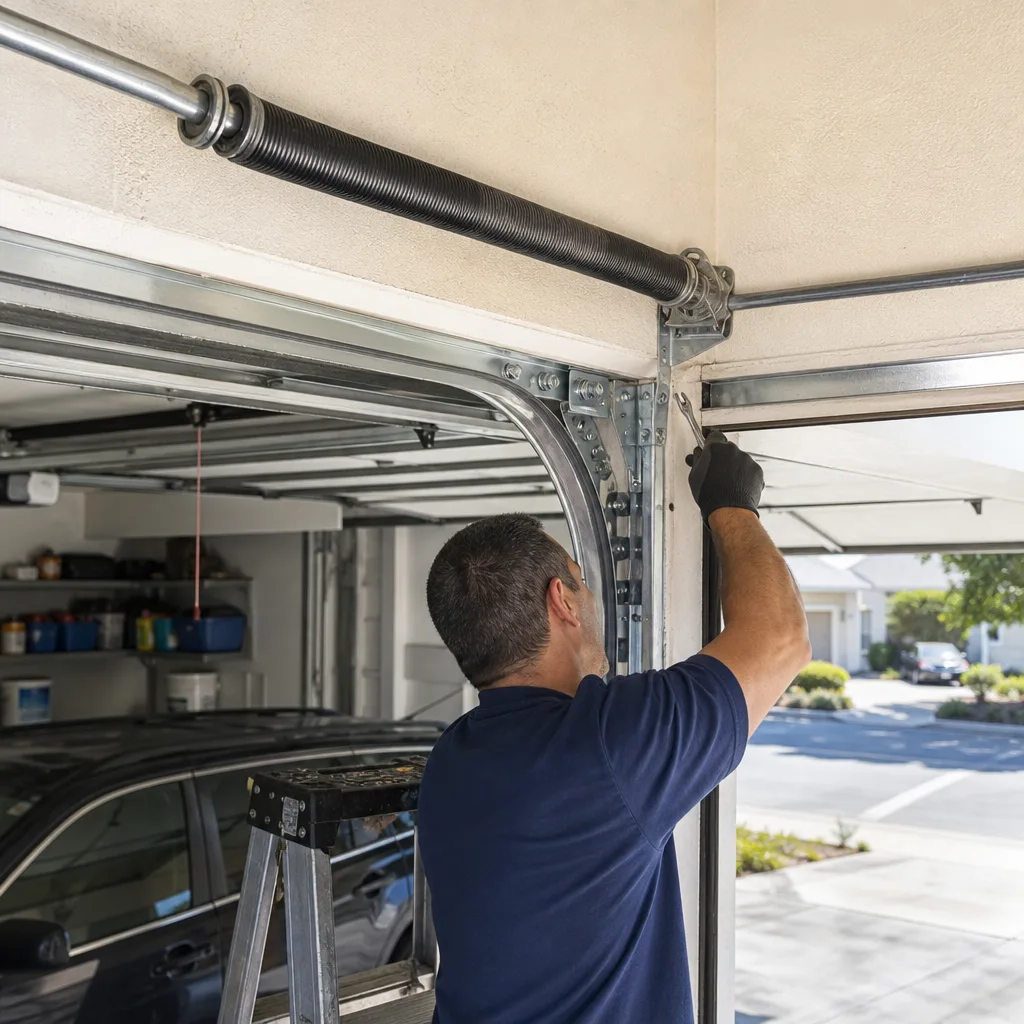
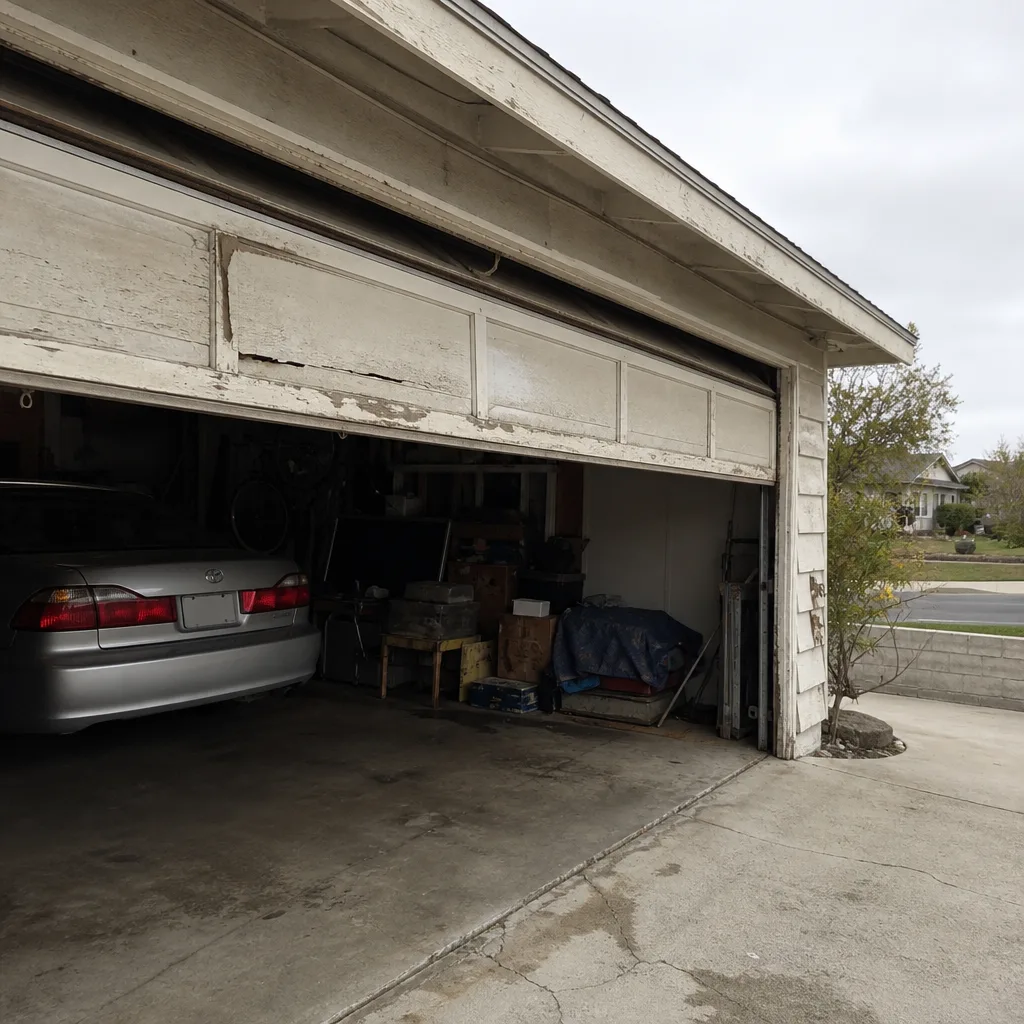
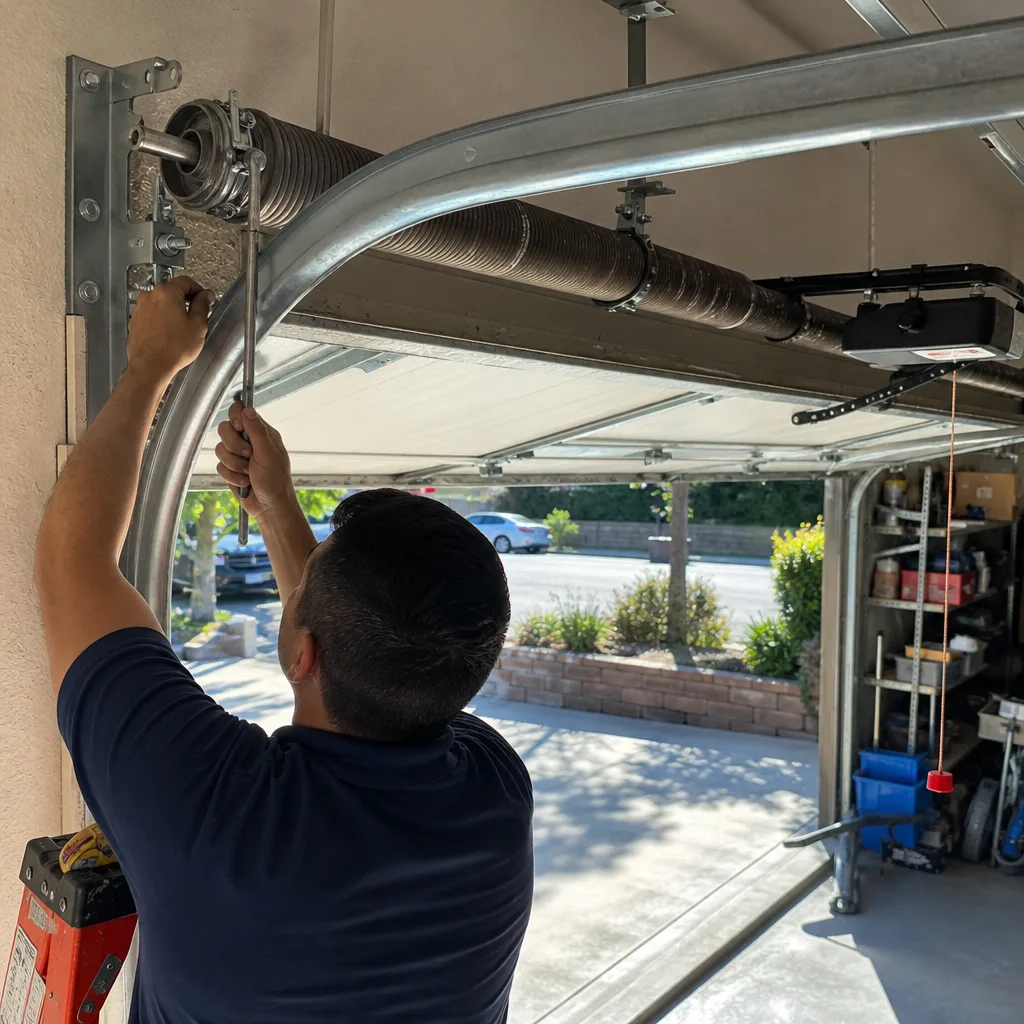
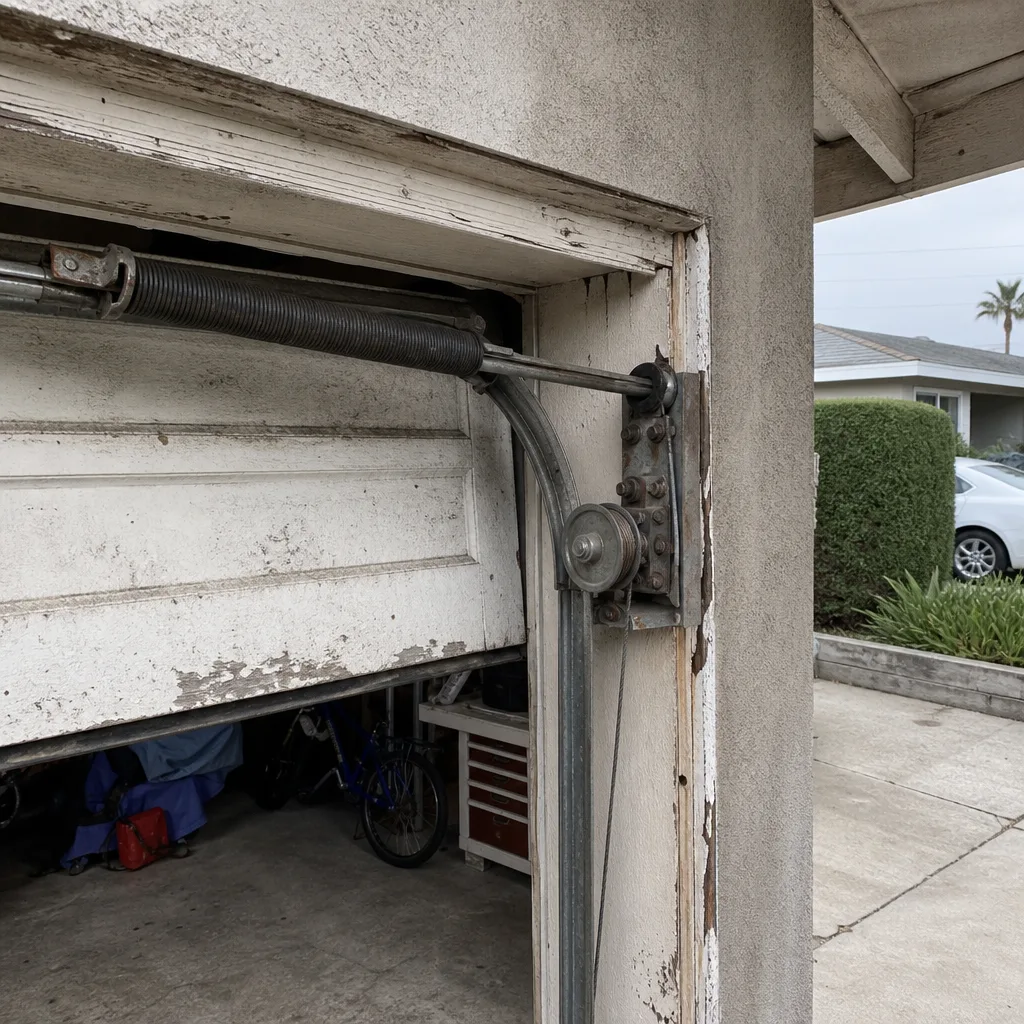
See the difference
 Before
 After
 Before
 After
 Before
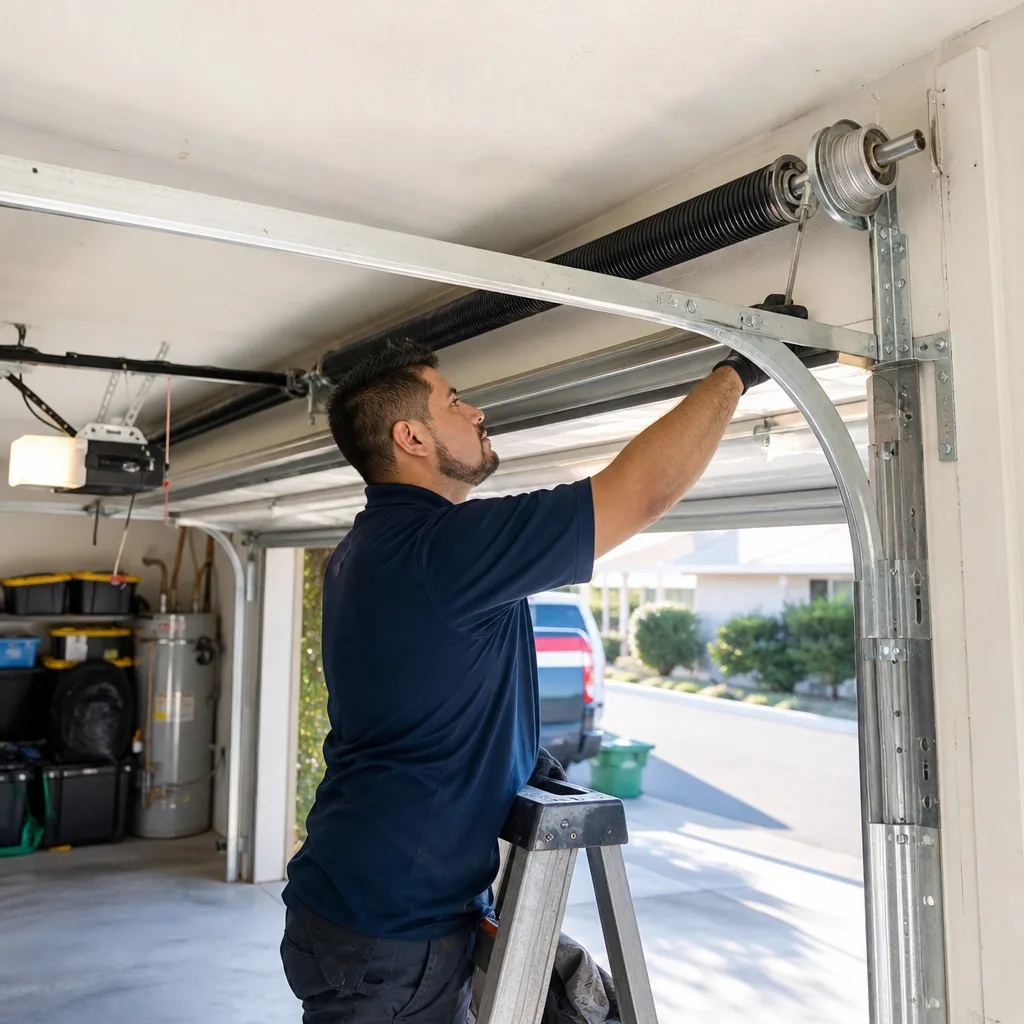 After
When to Call a Professional
Call a technician if the door fails the balance test, if you see frayed cables, if the spring has visible rust or a visible gap, if the opener makes a grinding noise, or if the door does not reverse on contact with an obstruction. These are not maintenance items. They are failures in progress, and operating the door in these conditions risks further damage and personal injury. If you’re unsure whether a symptom is serious, call and describe what you’re seeing. Anvil Garage Door Repair offers free estimates in Torrance, and we work on the brand you already have, whether that’s a Wayne Dalton door, a Raynor door, or anything else. Call (877) 705-2052.
Frequently Asked Questions
Lubricate the rollers, hinges, and springs every 6 months. The coastal air in Torrance breaks down light lubricants faster than dry inland climates, so a twice-yearly schedule is the minimum that keeps components protected. Call (877) 705-2052 if you want a technician to handle it during a tune-up visit.
The best lubricant for torsion springs is a lithium-based garage door grease, not a spray. Grease stays on the spring coils and provides a protective barrier against the salt-laden air that reaches Torrance homes near the coast. Avoid WD-40 entirely on springs.
No. Torsion springs hold the full weight of the door in stored rotational energy, and improper handling causes serious injuries every year. Spring replacement requires winding bars, specific torque procedures, and the experience to release tension safely. This is a job for a trained technician, not a DIY project.
A loud bang during operation typically means a spring has snapped, a cable has broken, or a roller has come off the track. Stop using the door immediately and call a professional. Continuing to operate a door with a broken spring strips the opener gears quickly.
Run the balance test monthly. Disengage the opener, lift the door halfway, and release it. If the door drops or rises on its own, the springs are losing tension and need professional attention before they snap. Call (877) 705-2052 for an inspection if you notice any drift.
Yes. The marine layer that rolls through Torrance deposits salt on exposed metal, which accelerates rust on springs, cables, and steel rollers. This is why cable inspections should happen every 6 months locally rather than annually. Coastal homes simply experience faster corrosion cycles.
The Bottom Line
Garage door maintenance in Torrance is not complicated, but it is specific. Lubricate the right parts with the right product, run the balance test monthly, inspect cables every 6 months because of the marine layer, and replace weatherstripping when it fails functionally, not when it looks old. Leave anything involving spring tension, cable replacement, track realignment, or opener internals to a technician. If you work through this checklist consistently, you’ll catch springs before they snap and cables before they fray. Most major failures give warning signs first. This guide and our more guides & resources exist so you can read the signs. Written by the team at Anvil Garage Door Repair, serving Torrance since 2017.